Blockcast: Accelerating the Internet, Connecting the World
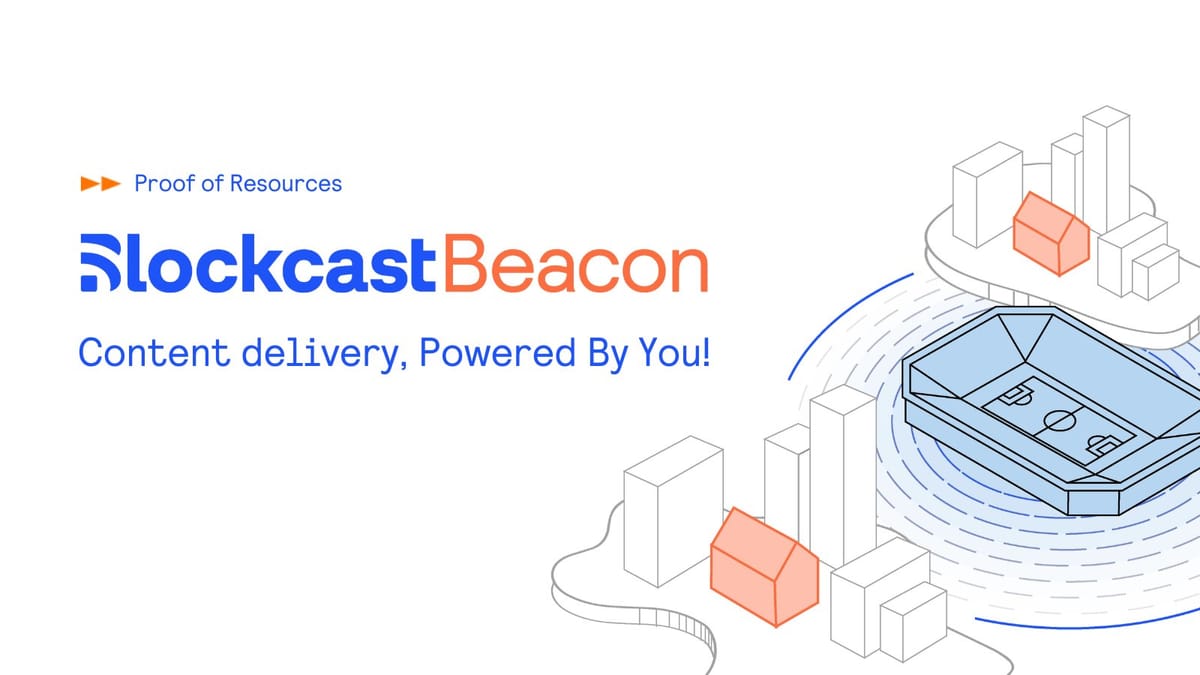
What is Blockcast?
Blockcast is a next-generation Content Delivery Network (CDN) that uses multicast technology to address bandwidth challenges in the era of booming streaming. Born at UC Berkeley, the project aims to build a decentralized network that leverages community power to deliver high-quality content like 4K and 8K globally while slashing costs for providers.
With the slogan "Content Delivery, Powered By You!", Blockcast is not just a technology but an ecosystem where anyone can participate and profit.
The Internet’s Challenges Today
The internet faces a critical issue: skyrocketing bandwidth demand. Statistics show 80% of internet traffic comes from video streaming, from Netflix to live sports. However, the traditional unicast model—where each viewer gets a separate data stream—wastes significant bandwidth.
For instance, when 1 million people watch a World Cup final, the system sends 1 million identical streams, clogging networks. In rural areas, weak infrastructure makes streaming 4K nearly impossible.
Blockcast steps in to solve this, using multicast technology to send one data stream to multiple users, saving bandwidth and reducing costs.
How Blockcast Works
Blockcast builds a content delivery network based on three key pillars:
1. Multicast Adaptive HTTP Proxy (MAHP)
MAHP is the heart of Blockcast, enabling deployment on devices from data centers to home smart TVs. This technology delivers content efficiently by sending a single stream to multiple users, replacing millions of individual streams.
2. Blockbox: Everyone Can Join
Blockbox is software or a caching device that lets you become a node in the Blockcast network. By participating, you can:
- Store content locally (e.g., videos, game updates).
- Share content with your neighborhood or community.
- Earn Blockcash—a Web3 token—as a reward.
For example, install a Blockbox at home, cache a World Cup match, and share it with your neighborhood for smooth 4K streaming while earning income.
3. Open Capacity Marketplace (OCM)
Launching in April 2025, OCM is an open marketplace where content providers (e.g., Netflix, gaming studios) can buy bandwidth from:
- Internet service providers (ISPs).
- Broadcasters using ATSC 3.0, 5G, or satellite.
- Individual nodes running Blockbox.
OCM uses the Open Caching standard, ensuring transparency and compatibility with existing CDN systems.
Benefits of Blockcast
Blockcast delivers value to all stakeholders:
- Content Providers: Slash delivery costs by 80-90%, enabling 4K/8K content without price hikes.
- ISPs and Broadcasters: Monetize unused bandwidth for new revenue without heavy investments.
- Individual Users: Enjoy better streaming, especially in rural areas, with faster speeds and stable quality. Node operators also earn tokens.
- Global Community: Bridges the digital divide, bringing high-quality content to every corner of the world.
Achievements and Future Plans
Blockcast has made significant strides:
- Funding: Secured $2.85 million from Lattice Fund and Protocol Labs in 2024.
- Proven Roots: Evolved from the Magma project, acquired by Facebook and used in Helium 5G.
- Industry Collaboration: Member of the Streaming Video Technology Alliance (SVTA), contributing to Open Caching standards.
Future Roadmap:
- January 2025: Phased rollout of RELAY nodes.
- April 2025: Launch of the Open Capacity Marketplace at NAB Las Vegas.
- Continued expansion of the node network and partnerships with global ISPs and broadcasters.
What Makes Blockcast Special?
- Cutting-Edge Technology: Multicast saves bandwidth, outperforming traditional unicast.
- Community-Driven Model: Open to individuals and businesses, fostering a decentralized network.
- Seamless Integration: Supports industry standards for compatibility with existing CDNs.
- Big Vision: Connects the world, delivering high-quality content everywhere.
Challenges Ahead
Despite its potential, Blockcast faces challenges:
- Fierce Competition: Giants like Akamai and Cloudflare dominate the CDN market.
- Network Scale: Needs enough nodes to ensure efficiency.
- Security: Managing individual nodes requires robust data protection mechanisms.
- Technology Adoption: Convincing ISPs and content providers to adopt multicast technology.
Conclusion
Blockcast is more than a CDN—it’s a revolution in how content is delivered online. By leveraging multicast technology and community power, it reduces costs and enhances user experiences worldwide. With a clear roadmap and backing from reputable investors, Blockcast is poised to be a game-changer in the streaming industry.
Join the Blockcast network, become a node, and help build the future of the internet!
Learn more at: Blockcast Network